

The Alam Library, affectionately known as Alam Kutubkhana Dubolia, traces its origins to the early 1950s, when it was founded by the late Mahmood Alam, lovingly referred to as "Barkey Bhaiyya" by family and locals alike. His life was a bridge between deep rural roots and scholarly ambition—born in 1929 to Maqbool Alam and Fatimah Khatoon in a revert Rajpoot farming family that had embraced Islam in the early 1800s and adopted Alam as family name. The Alam family, settled between the Himalayan valley near Gorakhpur (Uttar Pradesh) and Nepal’s borderlands, were deeply grounded in both the soil and in service.
Although their wealth and landownership grew through generations—thanks in part to the pioneering leadership of Maqbool Alam aka Abba, a graduate of Aligarh Muslim University in 1935—the family remained committed to humility, community service, and education. After returning from AMU, Maqbool Alam worked alongside Johnhall Bridgeman, whose legacy shaped the region known today as Bridgeman Ganj, a well rooted grain market of that time. In the surrounding villages and towns, the Alam family quietly contributed to the establishment of schools, mosques, and Maktabs, offering consistent support to local communities. Many of these institutions remain active today, continuing to benefit from the family’s enduring commitment to education and service.
Mahmood Alam (Barkey Bhaiyya), inspired by this legacy, started education at Islamia College in Gorakhpur, where he actively supported the Muslim League. During the volatile days of Partition of the Indian subcontinent, he ventured to Peshawar, where an experience profoundly changed his life—a wealthy gentleman who welcomed all with free meals, tea, and access to his private library. That simple act of generosity and love for knowledge became the blueprint for Mahmood’s own vision.
Upon returning from Peshawar in the early 1950s, after a brief stay in Ajmer, Mahmood Alam returned to his family residing in Pachgawan village near Bridgeman Ganj with a dream: to establish a space for learning, reflection, and reading. With Mr. Marzooqi (known as Murgi Master, originally from Indonesia) hired as the first librarian, Mahmood Alam founded Alam Kutubkhana Dubolia in 1955 in his family’s ancestral farmhouse, Dubolia.
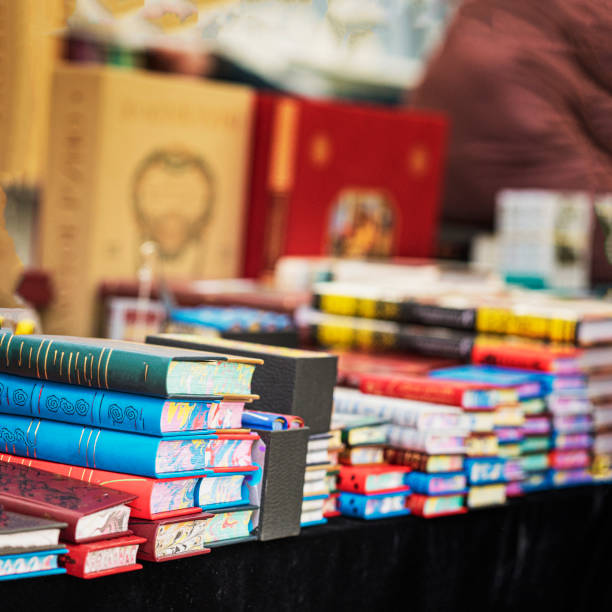
The collection began with detective novels by the iconic Ibne Safi, various religious texts, and literature in Urdu. Every book was lovingly preserved. Mr. Marzooqi wrapped each one in bamboo cover, while Mahmood Alam brought a rubber stamp from Gorakhpur inscribed with the library’s name:
“Alam Library Dubolia.”
Though Mr. Marzooqi later moved away and Mahmood Alam passed in December 1985, being laid to rest in the graveyard of Aligarh Muslim University, the essence of Alam Library never truly faded. Over the years, books scattered across homes and shelves, yet the original dream continued to linger in memory.
Reviving the Legacy – A 21st Century Initiative
Nearly six decades later, Mahmood Alam’s great-grand son, Saeed Alam, visited Dubolia in 2018 as a young boy and unknowingly stepped into a forgotten legacy. What began as a simple visit to his ancestral village became a pivotal moment of rediscovery.
During his 5 years stay in Aligarh, Saeed was deeply influenced by stories of the past and the surviving books that spoke volumes about a time when knowledge was nurtured with love and preserved with intention. A defining moment came when, on a recent visit to his grandparents’ home, he stumbled upon a forgotten stack of books tucked away in a quiet corner—books his grandfather had brought from Alam Library Dubolia, hoping one day his children and grandchildren would read and benefit from them.
Tragically, Dr. Shah Alam passed away at a young age in Michigan, just a few years after the death of his father, the late Mahmood Alam. Though covered in dust, the books radiated timeless wisdom. Their bamboo-wrapped spines and worn pages stood as silent witnesses to the sacrifices and dreams of those who came before.
It was this discovery and connection to the past that motivated Saeed to revive Alam Kutubkhana Dubolia—not just as a nostalgic remembrance, but as a modern knowledge platform to honor his great grandfather Barkey Bhaiyya’s (Mahmood Alam’s) vision and expand its reach globally.
For Saeed, that discovery transformed from coincidence into a calling—a powerful realization that the preservation of knowledge is never accidental. It is a legacy built on love, sacrifice, and vision, passed down through generations.
Today, the legacy of Maqbool Alam (Abba) and his eldest son Mahmood Alam (Barkey Bhaiyya) lives on—not only through the original books but also through their descendants, now numbering in the hundreds and spread across five continents, from the quiet farmlands near Gorakhpur to cities like Delhi, Aligarh, Chicago, San Francisco, Toronto, Sydney, Melbourne, Aukland, Dubai, Kuwait and London. Their family has become a global community, bound together not just by blood, but by the enduring values of learning, service, and heritage.
The revived Alam Library, now taking shape in its digital form, is far more than just a repository of books. It is envisioned as a global hub of shared knowledge, a space for digital learning, literary collaboration, and family connection. It is a virtual meeting ground where future generations can access timeless wisdom, publish their own writings, and carry forward the mission of Taleef wa Tasneef—writing and publishing as a means of enlightenment and change.
It is a platform where the youth will not only learn, but lead. Rooted in the past, yet designed for the future.
And who knows—perhaps the next great author, educator, or changemaker will be inspired by this very initiative. Maybe a young, curious mind, once feeling disconnected, will find purpose here. Perhaps an idea scribbled in the digital margins of a forgotten manuscript will ignite a spark that reaches the world.
This is more than the revival of a library.
It is the rebirth of a legacy.
This is Alam Kutubkhana, reimagined—for the world, for the future, and for every soul who believes in the power of knowledge.
Under the MAKTAB initiative, the Alam Library is being reimagined as a digital learning and publishing center, offering:
A free-access digital library of timeless and original Tarbiyah content
Youth writing and publishing mentorship to develop the next generation of authors
An active Taleef wa Tasneef Hub for editing, reviewing, and producing original works
Student writing workshops to nurture creativity and expression
eBooks and mobile-ready content for universal access
Print-on-demand support to make books affordable for all